Advertisiment

Showing posts with label gear. Show all posts

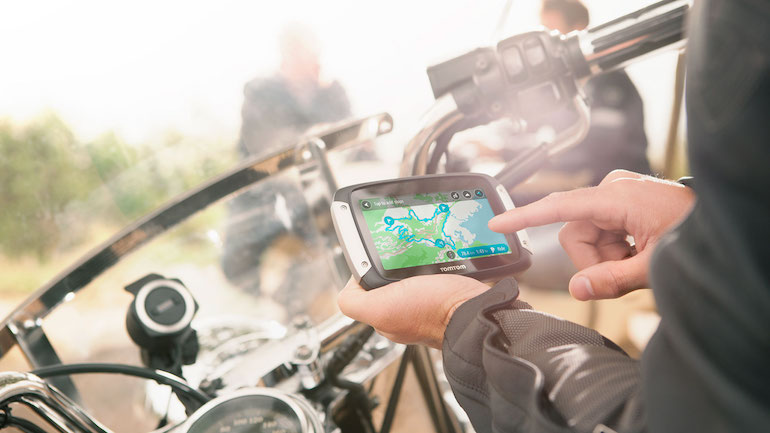
Gear review: TomTom Rider

ADSENSE HERE
The first thing to get out of the way in reviewing the TomTom Rider is to determine exactly which device we're talking about, since it goes by different names. The Rider 40, Rider 400 and Rider 410 are all the same device in terms of hardware and functionality; the numerical differences identify the maps offered.

As far as I can tell, the only version sold in the United States is the Rider 400. It comes equipped with maps for the United States, Canada and Mexico. Buy the Rider 410 in Europe, though, and you'll end up with maps for the entire world, which strikes me as the better buy.

Either way, TomTom promises "lifetime" updates for the maps, which is a dubious claim because TomTom isn't very specific as to what it means by the word "lifetime." It's not your lifetime, nor even the lifetime of the physical device. Instead, "lifetime" roughly translates to: "as long as we feel like it." Or, in TomTom's words, "the period of time that TomTom continues to support your device." How long is that period of time? Dunno. Maybe a year, maybe 10 years, maybe a week. There's no clear information that might make you feel better about paying so much for a product that does something your phone does.

Worth The Cost?

That said, I prefer a motorcycle-specific GPS to a phone for a number of reasons. Firstly, because I like to go places that aren't in cell range. Shortly before buying the Rider last year, I tried mounting my LG G4 to my bike and using Google Maps. The phone got confused pretty much as soon as I left the city, went hot, then gave up and shut itself off. Additionally, phones aren't weatherproof, nor necessarily designed to tolerate the vibration they're subjected to when mounted on a bike.


Lack of weatherproofing is also the reason I chose the Rider over a less expensive car GPS; it's impossible to escape the rain in Britain. If you live somewhere dry, a car GPS may work for you.

Unique Features

Perhaps to discourage fair-weather riders from doing such a thing, TomTom offers a handful of features unique to the Rider for motorcyclists. Most notably, there's the clumsily named "Plan A Thrill" feature. It lets you arrive at a destination via the most interesting route available. You can even choose different levels of hilliness and twistiness.

I've found the feature to be generally disappointing. For example, asking it to navigate from my house to the headquarters of Brecon Beacons National Park, about 40 miles away, I am given a route that takes upward of three hours and wends through every urban center in the space between. It's twisty, yes, but hardly thrilling.

More useful, though, is the real-time traffic feature. Pairing with your phone, the Rider can alert you to delays up ahead, give you an idea of how long those delays are and will occasionally reroute you. Note my use of the word "occasionally," sometimes I feel it's too willing to put me in traffic.

Nonetheless, it's one of my favorite features. If nothing else, it gives me a sense of how long the traffic is going to last, with the status bar indicating how long I'll be delayed and how far I am from the incident that's delaying me.

Mounting

The Rider attaches on handlebars or accessory bar via RAM mount. I made a redneck accessory bar for my Suzuki V-Strom 1000 using plastic tubing and a shower curtain rail — it's hilariously ugly — but I've attached the Rider to the handlebars of bikes I've tested for RideApart and found I'm usually able to put the screen in or near my line of sight.


The mounting base can be wired to the bike's battery to ensure the device stays charged. If you're unwilling to mess with wiring, my experience is that it will last more than five hours on a charge. 

Menu and Keys

Timing it, the Rider takes a full minute to boot up. Once awake, it's easy enough to use. The menu is simple though not immensely intuitive. A recent software update has helped things a little in allowing you to choose where icons are placed.

The touchscreen keys work most of the time, but you haven't got a snowball's chance in hell of pressing them if you're wearing winter gloves. Even summer gloves can be too much for smaller keys. Meanwhile, I've had the touchscreen get confused by heavy rain.

Related to the above, the system of sub menus can be annoying. For example, in the main menu there is an option that says "Gas Station." Think about what you'd want from that option. The nearest gas station, right? Instead, you're presented with a map too large to be of use. You have to click and zoom in on the map to see how close stations actually are to you, or you need to click to a list view and select a station that way. You have to click again to choose a station, and again to set a route, and again to initiate that route. All this clicking is too involved to be done on the move, usually needs to be done gloveless, and fails to understand the urgency inherent in a person's having chosen the "Gas Station" option in the first place.

On-Screen Information and Directions

The Rider's map display is a strength over similar GPS devices. It's clear and accurate. The arrow indicating position never lags. At key points, such as motorway exits, the map will automatically zoom, telling me which lane I need to be in. The screen is bright and easy to read even in bright sunlight, and switches automatically to a less retina-burning night view once sunset hits.


You can choose to display the map in horizontal or portrait view simply by turning the device (the Rider's base allows you to click between positions with minimal effort). I prefer the horizontal view because it offers a status bar that shows distance left to my destination, estimated time of arrival, and indicates key points of interest—.e.g, traffic congestion, rest areas or gas stations — that I will encounter ahead. The device also alerts me to the presence of speed cameras, stoplight cameras and high-accident areas.

Direct Route

My primary use for the TomTom Rider is getting from point A to point B. This is a simple process of searching a location or address, selecting it and initiating the route. Most of the time this works. However, in Italy I learned that the way Italians write their addresses is not the way TomTom thinks they should be written.

An annoying quirk of the Rider is that it will initially tell you the distance to a destination as the crow flies. It's only when you actually initiate the route that you learn how many miles you'll be riding. You can also set a location by painstakingly dragging the map, zooming it in and out, and clicking on a specific point. I tried this once; it was so frustrating and awkward I almost threw the device off a cliff.

You can choose a number of options in how the route is determined, e.g., fastest route, shortest route, most eco-friendly route, twistiest route, etc. You can also choose to avoid highways and tolls and so on, but it's not possible to set an upper speed limit. Older car TomToms had that feature, and I think it would make sense on the Rider; imagine the naked cruiser rider who'd like to avoid the turbulence that comes from riding above 60 mph.


Route Planning

When it comes to more involved route planning, the Rider offers a "lifetime" subscription to Tyre Pro, an interactive route-planning software that doesn't interact with Apple products. So, I've never used it.

TomTom's MyDrive website allows you to plan a route with multiple destinations, but you can't specify roads. It's also a glitchy process that only seems to work on 1 out of 5 attempts. The good news is the Rider has no problem accepting GPX files. Which is to say, once you work out the circuitous process of downloading GPX files onto the device it has no problem using them. So, if someone else creates a route for you, or you're lucky enough to be going someplace recommended by Ride magazine, everything is peachy.

Recalculating

The Rider is generally pretty quick to serve up alternative routes if you miss a turn or decide you don't like the look of something (perhaps the road is flooded or, as happened to me in Mid-Wales recently, occupied by a wedding party on tractors). The chances are 50/50, though, that the recalculation will either desperately try to put you back on the exact same route, or run you 30 miles in the opposite direction up an unpaved mountain pass –– I've been subjected to both scenarios.

Meanwhile, alternative routes as a result of live traffic information are suggested a little late in my opinion. On the motorway, an alternative route will be suggested only half a mile from the necessary exit. Which means scrambling to get into the correct lane in a relatively short space of time.


The system is better than it used to be, though. When I first bought it, a message would ask if I wanted to take the alternative route and I had to click to accept. See above about the Rider's functionality when wearing thick gloves. Now, the potentially new route is simply displayed in flashing green and the status bar indicates how much time the GPS thinks you'll save; no need to touch the screen, just follow the route or ignore it.

Bluetooth

The Rider offers Bluetooth pairing, so you can hear the GPS instructions if you have a headset. I don't have such a device; there are already too many voices in my head. And I have concerns as to how well it would work.

The GPS also uses Bluetooth to pair to my phone for traffic updates and I know it struggles to maintain connection. I have heard from someone with a Sena SMH10 that the same thing happens with his headset: it connects and disconnects constantly.

Apparently you can set up the Rider to serve as a kind of interloper between your phone and headset, so that when you receive a call you'll see it on the screen and can press a key to accept the call. I'm not sure I get the point of this. See again what I said about functionality when wearing thick gloves. Plus, Bluetooth headsets are designed to allow you to answer calls pretty easily anyway.

Final Verdict

If you haven't guessed, my overall opinion is that the Rider isn't worth the money that TomTom asks for it. At the same time, however, I think it's a device worth owning. I'm not aware of a better motorcycle GPS, and ultimately I find the Rider to be incredibly useful. That is primarily because of the increased sense of freedom it gives me.

One of my favorite things to do is head out with no particular destination in mind, allow myself to get completely and utterly lost, then click on the Rider and allow it to guide me home. That provides a psychological safety blanket that has made me far more adventurous and daring than I am naturally inclined to be. I've so far felt free to wander in nine different countries with this little device always there to help me out.

Cost: US $499 (£319 / €399)
Used for: 11 months/ 10,000+ miles
Info: TomTom.com

–––––––––––––––––––––––––
–––––––––––––––––––––––––

This June I'll be taking part in the Royal British Legion Riders 1000 ride, helping to raise money for the Poppy Appeal. Please check out this page to learn more and donate in support of British veterans, currently serving military personnel, and their families.

––––––––––––––––––––––––
––––––––––––––––––––––––
ADSENSE HERE

Long-term gear review: Corcoran Jump Boots

ADSENSE HERE

I wrote a post about Corcoran Jump Boots a few years ago, after about a year of use, but I thought it would be good to offer another review, now that I'm considering retiring my pair in favor of some Alt-Berg boots. Or, well, perhaps not retiring, but taking out of regular service.

I first bought a pair of Corcoran Jump Boots about three years ago, based on the recommendation of the dog camping guy. Since then, I've put roughly 24,000 miles on them, using them in all weathers. 

In Wes Siler's article he suggests these Corcoran boots as a good middle ground between fashion, usefulness, and safety.

"[A] little more normal to walk to do normal things in," he wrote. "I can even dance in these."

Since I grew up in Texas, where dancing consists of spinning on your cowboy boot heel while trying not to spill your Lone Star, that's not really an impressive claim. I can "dance" in ski boots.

So, yes, these are dancing boots; perfect for those of you riding stereo-laden baggers and tourers, eager to bust out a boogie at stop lights. But that's not why I bought them. I chose these boots because they are: 1) cheaper than any equivalent-quality boot I could find; 2) made in the God-blessed United States of America. Specifically, they are made in Martinsburg, Pennsylvania — a community so full-on Americana that its police department offers to check up on your house for free while you're on vacation.

The story of Corcoran Jump Boots stretches back to World War II, when US paratroopers wore them on the battlefields of Europe. Made of thick, insanely durable leather, they offer a decent amount of protection for motorcycle use in the sense that internal ankle support, a steel shank, and high lacing all help to keep the foot firmly in place.


I had to look up what a shank is: it's the bit of a shoe's supportive structure that runs down the middle of your foot, between the heel and ball of your foot. I can't feel said shank when wearing the boot, but the firmness it offers possibly explains why I have found the boot to be a good substitute for a hammer when trying to put tent pegs into hard ground. Obviously these boots don't offer the sort of protection you'd get in something specifically made for high-speed track riding or ankle-snapping off-roading, but for everyday all-the-time use I've found them to be pretty good.

They've become immensely comfortable over the years, to the extent that I've been known to walk several miles in them. They are unlined, so they were about as tolerable as any boot could be when riding in 102ºF Italian heat last summer. In Britain, where warm weather is extremely rare, I find that more often than not a good, thick pair of wool socks is necessary. When temperatures drop below 40ºF, two pairs of socks are required if I'm going to be riding for more than 30 minutes.

The boots are not waterproof, but a dedicated regimen of slathering them with Nikwax helps keep them fairly water-resistant... within reason. When I spent several hours riding through constant downpour in Luxembourg, Belgium and the Netherlands last autumn, puddles formed inside the boots and things took roughly a week to dry out. But I'm not sure many boots would have faired a whole lot better in the same situation.

Meanwhile, failure to religiously clean and re-wax the boots has occasionally left me with soggy feet.
One of the things I like is the fact the boots lace up and, as such, can be brought tight against the calves. Because I live in a place where it rains all the time, I prefer to wear my trousers over my boots, rather than tuck them in and risk having water run inside. Having the boots tight against my leg means they'll fit beneath pretty much any riding pant.


Additionally, I prefer the secure feeling of boots that can be laced tight. Many motorcycle boots are made for the pant-tuckers of the world and leave my leg feeling too loose and unprotected. The most extreme example of this came when I was able to kick off a fully strapped pair of Forma Adventure boots.

Corcoran Jump Boots come with a set of smooth, hard rubber soles that Wes suggested are "good for making them last," but my experience was that they wore away pretty quickly. But maybe I am just really hard on boots; I have had these resoled three times.

Which speaks to another advantage of the Jump Boots: they're easy to get repaired. High-end boot manufacturers like Daytona will sometimes repair worn soles if you take them to an official dealer and have them shipped off to the factory. But that's incredibly expensive and time consuming. Meanwhile, Jump Boots can be resoled at your local strip mall shoe repair store in a day or two for considerably less money.

The boots take a while to break in, and when I first bought them they were so stupidly shiny as to make me feel foolish. But over time they've proved themselves so comfortable and versatile that finding replacements has been challenging.

Ultimately, I decided these aren't quite suited to all-the-time British use and bought a pair of truly waterproof boots that meet European safety standards. I'll still hold on to my Jump Boots for summer rides — especially those that see me traveling somewhere and doing a fair bit of walking. I've treated these boots pretty rough, but I'm confident they've got several years of life left in them.
ADSENSE HERE

Gear Review: Auritech Biker Earplugs

ADSENSE HERE

Time used: Four months and counting
Cost: About $35 with shipping

There's nothing sexy about ear protection. Imagine some company paying David Beckham to model earplugs. Or special Deus-branded 'plugs being wantonly fondled by a bearded hipster while his waifish girlfriend slow-mo kickstarts a '65 Royal-Enfield in the background.

Nope, it just doesn't work.

In fact, ear protection is a little dorky. No doubt, those riders who refuse to wear a helmet will see earplugs as ATGATT-ism out of control.

But that doesn't mean hearing protection isn't important. It's a very real issue. My grandfather lost much of his hearing as a young man, thanks to WWII artillery guns. Having to shout my every conversation with him convinced me at an early age I wanted to keep my ears protected, so I have always ridden with 'plugs.

My go-to's are polyurethane foam earplugs of the sort they hand out at rock clubs. They're handy, cheap, disposable, and the ones I use do a really good job of blocking out sound. Though, sometimes too good a job. Riding in the city, I can hear sirens and horns, but I can't understand conversation. And cars with quieter engines can sneak up on me if I'm not paying attention.

A few months ago I got a hold of a pair of Auritech Biker earplugs, which the company claims have a "precision-tuned, patented ceramic filter" that "allows conversation... to remain clearly audible, without the muffling effect of conventional earplugs."

Effectively, Auritech claims its earplugs will block out the stuff you don't want to hear, while magically allowing in the things you do. That's not exactly Auritech's pitch, but it's more or less how I translate the seven pages of information that arrived in the mail along with the earplugs.

Looking like tiny, orange Christmas trees and consisting mostly of a soft rubber, the 'plugs are smaller than the foam versions because they don't expand in the ear canal. In their center is a tiny ceramic piece that Auritech says filters out damaging frequencies, rather than just blocking all noise.

Costing roughly as much as 200 pairs of my old disposable 'plugs, the reusable Auritech Biker earplugs are designed to be a more permanent item and come with a handy aluminum carrying tube. I've been wearing them off and on since I rode from Cardiff to Milan back in November, using them in several different riding scenarios.

What's Good

Since the plugs don't expand they don't put pressure on your ear canal. The rubber, or "unique thermoplastic shell material," is durable and stands up well to my disgusting habit of flicking away earwax that occasionally collects on the 'plugs.

Because you don't have to stand there, counting "One Mississippi, Two Mississippi..." and waiting for foam to expand, these earplugs are easier to set in your ear. So they don't add more than a second or two to your pre-ride gearing up process.

I remain skeptical of the amazing claims made of the ceramic filter, but I will admit I find these preferable in urban situations. I'm able to hear people speaking to me, while at the same time not experiencing discomfort from wind and engine noise. And as a result, I definitely feel I'm more alert in city situations. The earplugs are easily washed in warm, soapy water, or if you're lazy like me, you can leave them in your jeans pocket when you do laundry (remove before tumble drying). 


What's Not Good

I still prefer a greater level of silence when doing extended runs. If I know I'm going to be droning along at speed for a few hours I'll choose a pair of Howard Leight MAX disposable earplugs. Additionally, the ability to keep out wind/engine noise decreases pretty dramatically as your speed heads north of 65 mph. This is especially true if you're on a naked, or some other bike that leaves you out in the wind.

If you happen to set the earplug incorrectly, or it gets jarred as you put on a full-face helmet, it can be very uncomfortable. I also find these to be less comfortable than foam 'plugs if worn for really long periods, such as when I rode 685 miles from Milan to Rotterdam in one day.

Because these are reusable, it's likely you will get into the habit of only bothering to wash them when they really need it. Inevitably, then, you will one day find yourself juggling your gloves and key and helmet, and you will absent-mindedly place the not-recently-cleaned earplugs in your mouth. And, trust me, that will be gross.

Verdict

The Auritech Biker earplugs cost more than disposables, but I think it's safe to say they will last for at least 200 uses so price isn't really an issue. They're easier to wear, once you figure out how to wear them, and would allow you to still employ a Bluetooth system in your helmet. If you're an ATGATT nerd, the fancy carrying tube makes them seem more slick and "professional" than foam earplugs, and hey, anything that can make earplugs feel even a little less dorky is probably a good thing.

Whether these are better than foam earplugs, though, depends on the type of riding you do. If you're the sort that stays off the interstate, and sits behind a nice, comfy screen, these are ideal because they allow you to hear more of the world around you. For long hauls they are less effective, but still, of course, better than nothing.

I feel the Auritech Biker earplugs are worth the cost, but I still tend to carry a set of industrial-strength foam earplugs in my jacket so I can switch according to riding conditions. Ultimately, though, what matters is that you wear some kind of ear protection. Because this is the thing about hearing: once it's lost, it doesn't come back.

(Originally published on RideApart)
ADSENSE HERE

Does it matter where stuff is made?

ADSENSE HERE
(Originally published on RideApart)

I've become obsessed with the idea of getting an Aerostich Roadcrafter, the famously unsexy safety onesie favored by adventurers and moto-journalists. I mean, just about every two-wheel-loving scribbler out there seems to wear one: John Burns, Jamie Elvidge, Marc Cook, Gabe Ets-Hokin, that guy who goes camping with dogs... 

And since I've been known to describe myself as a moto-journalist –– primarily just to annoy my father –– I feel I should look the part. But also, 'Murica y'all.

Roadcrafter suits are made in the God-blessed United States of USA Land –– specifically Minnesota, where I spent many of my formative years –– and the idea of being able to represent my home country every time I ride hits the semi-illogical pleasure center of my brain where patriotic thoughts are most often stored. Indeed, I think that may be the main reason I want an Aerostich: patriotism.

But I'll admit to being a man of fickle allegiances. I've lived in Her Majesty's United Kingdom of Great Britain and Northern Ireland for almost 10 years now, and I've developed some affection for it. As such, there may be an argument for my buying one of the textile suits made by Hideout, a company based in the English county of Hertfordshire.

I've met some of the women who run and work at the business, and that humanizes the product for me. It makes the idea of Hideout gear feel more important, more special.

Hideout Hi-Pro Adventure suit

In both cases –– Aerostich and Hideout –– the goods are said to be of extraordinary quality. And with that, comes an extraordinary price tag. In the case of the 'Stich, you're looking at shelling out upward of $1,700 for a suit with additional bells and whistles and some tailoring. Meanwhile, a two-piece from Hideout easily heads north of $2,300.

That's eyewatering, but keep in mind a two-piece from Rukka can put an equally large hole in your wallet: about $2,200. Buy the best two-piece suit Klim has to offer, and you could end up paying more than $2,500.

In my mind, I've dismissed those last two. Rukka gear comes from China, and asking the origin of Klim stuff results in a murky, apologetic admission that it comes from a lot of places, none of which are the United States.

All of this is academic, of course. I have nothing close to the money needed for even the least-expensive of these options. But I tell myself that if I did I would want my gear to be "local" (local either to where I'm from or where I am presently).

This speaks to an idea of goods origin that I've been developing recently. I want my stuff to come first and foremost from 'Murica, but if that's not possible, I'd like it to be from the UK or Ireland. After that, Canada and Mexico, then the European Union, and finally, any one of the other 75 countries at the top of the Democracy Index.

But, of course, that's hard to do. I'm writing to you on a device that was assembled in China: a country listed well below those top 75. And in inspecting the labels on the clothing I'm wearing right now, I'm only scoring 1 out of 5 in the conscientious buying game.

Aerostich Roadcrafter Classic

Meanwhile, perhaps simply to assuage feelings of guilt, I can't help asking myself if it really matters.

I mean, let's say I had the money for one of Hideout's fancy, made-to-measure get-ups. I don't know their gear to be demonstrably superior to, say, Rukka or Klim. Hideout suggests as much, but you'd expect it to say that. Finding independent reviews to back up that claim is a challenge (equally, I can find no negative reviews).

Still, I'd choose the UK brand because it's a UK brand. Because I've met some of the people who make it, but more broadly because I like the UK.

Effectively then, I'm deciding that something is "good" because its staff and manufacturing facilities are located in a place that is familiar to me. I assume they are people "like me" –– people who share the same Western values as myself, whose ideals align with my own. Is this silly? Is it jingoistic?

And more importantly, does it matter? The Vietnamese guy or gal who made the Triumph-branded riding suit that I wear at the moment is probably a cool person. But if he or she isn't, who cares? And what does it matter if he or she agrees with my world view? I bought the suit because it was the best thing I could afford at the time, and it's held up pretty well over the 21,000 miles I've worn it thus far. Shouldn't that be what matters?

Maybe. I clearly haven't gotten my undies in a twist over the fact that I don't ride a motorcycle that was made in the US or UK. For all my pro-Minnesota blustering I don't (yet) have a Victory or Indian in my shed. (Though, I will point out that the Suzuki V-Strom 1000 is made in Japan –– no. 20 on the Democracy Index)

Japanese bike in Luxembourg

I honestly can't decide which is the correct position to hold. I can't decide if "local" is actually important or if I just feel that way. I will say though, that none of this pondering has stopped me from setting aside money each month for an Aerostich.

And when I finally do get one, you can bet I'll be paying the extra $15 to have them sew on an American flag. If they can scrounge up a Minnesota flag, I might have them sew on one of those, too. Because who wouldn't want to be associated with the home of Prince, Dairy Queen, and Great Clips?
ADSENSE HERE

Gear review: Buffalo Bay leather motorbike gloves

ADSENSE HERE

I'll admit that I bought the Bay motorcycle gloves by Buffalo in something of a panic. Summer was on its way and the Furygan Revol Evo gloves I had been using through winter and early spring were getting to be uncomfortable. 

With temperatures pushing north of 16ºC my hands were getting sweaty in the Furygans, soaking the fleece lining and making them difficult to put back on after a stop. Unfortunately I had no money to speak of, so I bought the cheapest pair of gloves I could find that looked like they could hold up at least until my next paycheck.

That was in 2013. I've put in thousands of miles with the gloves since then, including using them almost exclusively during my trip to Italy back in July. And only now, with their third summer having come to a close, am I thinking of replacing them.

That will be hard. They have become my favourite gloves to wear –– so comfortable now, so broken in, that I don't really notice I'm wearing them.

The leather of the glove is decently thick. I wouldn't trust it at the sort of racing speeds suggested by the glove's design, but in any sort of spill below 45 mph I'm confident it would keep my skin intact. 

Anything above that speed and, well, honestly I don't know. I'd really prefer not to find out. Though, whatever protection this glove offers at highway speeds will obviously be better than nothing.

The stitching is good, by and large, and the glove secures well to the hand. A strap goes across the top of the wrist and two Velcro flaps help secure the glove at the carpal area. Lots of extra little padding at the palm and near the ulna and radius bones give the glove a robust feel. As do solid knuckle and joint protectors.

Venting in the knuckle protector and on the fingers helps to move air into the glove. When I was suffering borderline heat stroke on the Italian motorway, the only things not bothering me were these gloves.


However, as you'll see in the picture above, the stitching on the Velcro patch of my right glove is coming undone. If it were a more expensive item, I'd simply have the patch repaired and carry on using these gloves forever. As I say, they are really comfy.

But with their low cost in mind, I can't help feeling I should use this as an excuse to get something a little more upmarket. Something that I would actually trust at higher speeds.

Additionally, it should be noted that even when slathered in Nikwax these gloves are in no way waterproof.

All in all, though, I'd recommend the Buffalo Bays. They're worth the money as long as you are honest with yourself about what £30 will buy. It's not a Klím Induction or the like, true, but take the Bay for what it is and you should be happy for a few seasons..
ADSENSE HERE

Gear review: Suzuki Tank Bag

ADSENSE HERE

Here's the thing about a tank bag –– any tank bag: once you get one, you will find it extremely difficult to live without. That's something to consider very seriously; there is no turning back. They are that useful: gear so incredibly essential you will wonder how you ever got by without it. 

Ostensibly, the Suzuki V-Strom tankring tank bag is an official accessory item for use with both the V-Strom 1000 and the V-Strom 650. But I'll let you in on a secret: this is, in fact, a SW-Motech Quick Lock EVO City bag that's been given Suzuki branding. 

And that's a good thing. A very good thing. Because SW-Motech gear is top-of-the-line stuff. Made of 1680D ballistic nylon, it is rugged as hell. Holding 11 liters of stuff and expandable to 15 liters, the bag has one main compartment and three smaller external pockets –– one in the front (i.e., facing the rider) and one on each side.

On my recent European trip, the (expanded) main compartment was enough to hold:
–– Two base layer T-shirts
–– Base layer shorts 
–– Long-sleeve T-shirt
–– Three 500ml bottles of water
–– Six candy or breakfast bars
–– Four neck buffs
–– Sunglasses case
–– Digital camera
–– Mobile phone
–– Small packet of tissues
–– Small box of medication (ibuprofen, etc.)
–– Earphones
–– Small notebook
–– Baseball cap

In the front external pocket I was able to store: my Leatherman, two different rags for cleaning my visor and sunglasses, a small pouch containing coins of various currencies, and my house keys. The side pockets are less useful, but offered enough room to hold the bag's waterproof cover in one and a small flashlight in the other.

In the Netherlands

I have found the bag to be invaluable. Not only did it hold all that stuff on my Europe trip, but it also served as a quick and easy place to stow tollbooth tickets when zipping along on Italy's motorways.

The bag attaches to the bike via a simple lock ring that you bolt to the tank ring. It is so simple that the first few times I put the bag on the bike some part of my brain would think: "Really? That's it? Is this a trick?"

Motorcycling luggage is usually so strap-, hook-, or button-intensive that it's hard to believe something could work so easily. But it does. The bag just clicks on. To take it off, you pull a little wire loop located at the front of the bag. Sin problemas.

Compare that system to the magnetic Oxford X30 tank bag I used to use when I had the Honda. Putting a magnetic bag on the tank involved meticulously lining it up and ensuring all the magnets were just so, otherwise I risked having the bag shift. Not to mention the fact it chipped the paint.

It was a situation that created classic Chris Cope moments of unnecessary anxiety. Having spent several actual minutes getting the bag to set on the tank perfectly, I'd be unwilling to remove it if I were stopping someplace just for a toilet break. But then, going into a building without the bag –– and knowing valuables were contained within –– would result in my peeing in a state of rushed panic. Nobody needs that. 

With the Suzuki tank bag, though, life is so much easier. The bag has a handle, or, if I were so inclined, I could attach a shoulder strap that comes with it. It's big enough to hold my gloves and when I'm in the little boys room I can set it on the floor and set my helmet on top. 

Waiting for a ferry

Within the main compartment, along its side walls, are four elastic mesh pockets each large enough to hold an iPod. Within the bag's lid is a small, zippable mesh pocket.

Toward the back of the bag (i.e., that bit which faces the motorcycle's dash) there is a small rubber port hole through which I have run a USB cord that allows me to charge my phone/camera/Kindle using the V-Strom's 12v plug. There is a similar port at the front of the bag. 

The zippers are sturdy with large rubber-coated tabs that are easy to grab with gloved hands. To keep them from flopping around, the tabs for the front and side pockets can be tucked behind small elastic bands. The zippers for the main compartment don't have such a band but are placed in such a way that they won't catch on clothing or touch the bike. Additionally, the zippers for the main compartment can be locked via a small luggage lock of the sort we all used to have on suitcases before the TSA decided it needed easy access to our underwear.

As far as a tank bag goes, this is just about as good as it gets. It's easy to use, practical, and looks good on the bike. Especially on an adventure motorcycle it fits the aesthetic.

All of this said, I am always suspicious of glowing reviews, so I feel personally obligated to identify a few complaints. The first being borne of my own laziness.

Unless you pay your Suzuki dealership to install this bag there will be a certain amount of DIY involved. Definitely do not pay a dealership to install the bag. I am an idiot and I managed to do it. 

All that's required is replacing some screws on your tank ring, and setting the locking mechanism into the bag. The latter part of that process involves drilling holes into the bag, which is insanely stressful, but fortunately the incredibly useful website webBikeWorld has clear step-by-step instructions and photos to help ensure you get it right the first time.

In Germany, where the tank bag is made.

My only other complaint is that housing the locking mechanism eats up a lot of space inside the bag. And that creates a situation where some of the main compartment isn't as useful as it could be because you can't figure out what the heck would fit there.

Additionally, I worry just a little bit about that locking mechanism. When I was in the Netherlands I met a British BMW R1200GS rider who was using the SW-Motech version of the bag. He had been using it for a number of years and had recently had the wire release loop snap on him. Which, of course meant that he couldn't get the bag off to be able to refill the tank.

He was eventually able to get it free by detaching the locking mechanism from the bag, then detaching the mechanism from the tank ring with a set of pliers and a patient mind. He put it all together again afterward and was back to using it when I met him, but hearing about it is the sort of thing that puts doubt in your mind.

Not enough doubt, though, that I don't use the bag on every single ride. As I say, once you go tank bag you don't go back.

ADSENSE HERE

Gear review: Givi GPS and Smartphone Holder

ADSENSE HERE

I've lived in Her Majesty's United Kingdom of Great Britain and Northern Ireland now for almost 9 years. And I still don't get the roads.

I mean, I get the basic stuff –– ride/drive on the left, don't turn on a red light, try not to run into any old ladies or children, etc. –– but the more intrinsic stuff still escapes me. The layout of British roads doesn't make sense in the way that American roads do.

Here's what I mean: a few years ago, I was visiting Seattle for the first time and drove into a part of town (Fremont) for which I didn't have a detailed map. However, with just a basic sense of where I was in the grand scheme of things (i.e., north of downtown, west of Interstate 5 and east of Puget Sound), I was able to navigate to a restaurant I had read about that morning in a local magazine. 

That's it. I had an address and an idea of where a square mile of space existed on the planet Earth. With that information I was able to find a single building. Because American roads make sense. Or, at the very least, they make sense to me because I was born and raised in the God-Blessed United States of America (Yee-ha!)

In Britain, however, there is no way I could pull the same trick. Primarily this is because all the roads in this country were drawn by 3-year-old children with ADHD while they were riding horses and being force fed candy. Roads are inexplicably curvy and run in nonsensical directions.

Go to Google Maps, mis amigos. Type in directions from London to Swindon. You'll see that the M4 is the fastest, most-effective way to get between them. Look at how stupidly curvy that route is.

"Oh, come on, Chris," I can hear you say. "It's not that curvy."

No, it wouldn't be if there were mountains or any other large things in the way, but there aren't. That part of Britain is flat. As flat as North Dakota. The curves serve no purpose..

Look in particular at the bit of the route between Reading and Swindon. Do you see a lot of big towns in between? No. No you do not. There is absolutely no reason for the road to be weaving all over the place like that. 

It should be a straight line. In the USA and Canada and, well, just about any other country where people understand the basic tenets of the "Getting From A To B" concept, the road from Reading to Swindon would be straight and it would not take more than an hour to travel between two cities that are only 30 miles apart.


The inefficiency of British roadways is exacerbated by the fact I didn't grow up with them. I don't have an intrinsic understanding of how roads here work, as I do with American roads; I am not hard-wired to understand this silliness.

All of which explains why I find sat navs (aka GPS devices) to be invaluable. Well, OK, perhaps "invaluable" isn't the right word. I haven't been able to justify the purchase of a fancy motorcycle-specific device. Those things are expensive and, for my purposes, at least, don't really offer anything different than the far cheaper devices you'd use in a car.

The Givi GPS and Smartphone Holder is a handy bit of kit that allows you to use your existing car device or phone on your motorcycle. I've had one for a little more than a year now and have found it to be generally pretty handy, with only a few quibbles.

What's good:

Effectively, the holder comes in three parts: a big case in which you place your sat nav or smartphone, a bracket to mount the case onto your handlebars, and a waterproof cover. The bracket mounts pretty easily to your 'bars wherever you've got space and can be adjusted somewhat for angle. I've used this set up on both my Honda and my Suzuki without problems.

The case easily clicks on or off the bracket, which makes it easy to take with you when you leave the bike. The case mounts very securely, but for peace of mind there's also a safety strap on the case that you can loop onto your 'bars. I've found this strap to also be handy for clipping the case to a bag or my riding trousers when I'm off the bike.

The case zips open and has a few bits of foam padding that you can add or remove depending on the thickness of whatever device you're using. There is an opening at the bottom of the case to allow a power cord to your device if you're lucky enough to have a 12v outlet on your bike. On a side note, having a 12v outlet is the bee's knees –– thank you, Suzuki, for putting one as standard on the V-Strom 1000.

The holder case has a large, clear vinyl window flexible enough that you can type commands onto your sat nav device without too much difficulty (assuming you're not wearing gloves). In sunny conditions, the glare from this window can make it hard to see your sat nav's screen but in low light or cloudy conditions it works fine.

All the bits are durable and of good quality. I've ridden thousands of miles using the holder and it still looks new. On the bike, I find it "fits" in terms of aesthetic. It doesn't look cheap or out of place, which isn't really something I could say for the gaudy controller for my heated grips.

What's not so good:

I've already hit on the biggest problem with this bit of kit: it's not terribly useful in sunny conditions. Here's a picture I took recently in Brecon Beacons National Park. You can see the holder in the lower part of the photo.


Note that you can easily read my dashboard display, but the sat nav looks like it's turned off. It's not; it was on and set to its brightest display setting. Unfortunately, if the sun is angled right, the holder's vinyl window makes your sat nav's display virtually unreadable.

Because I try to only use a sat nav as back up, having spent a lot of time staring at actual maps before heading out to ride, this flaw hasn't caused me too much frustration over the past year. It helps, too, that I live in Wales, where it's rarely sunny. But I will admit that the flaw worked me into screaming rage last spring, when I found myself unable to get out of Edinburgh.

I don't have any sort of Bluetooth device in my ear, so my use of a sat nav on a bike is purely visual. Obviously, being able to hear directions would be helpful. If you've got the technology for such a thing, I'd probably suggest using it, despite my personal aversion to having audio devices in your helmet. Without such audio direction I find that the holder places my sat nav a little too low for my liking. I would like for the display to be higher, more directly in my line of vision. Touratech has a bracket adapter that would allow me to put everything a few inches higher. I may eventually bite the bullet and buy one of those.

Meanwhile, I've never been willing to test the effectiveness of the waterproof cover. A sort of hood that slips over the holder, I just don't feel I could trust this cover to protect an electronic device against British weather. In times when I've had to ride in heavy rain I've tucked the sat nav away.

A motorcycle-specific sat nav, like a TomTom Rider 400 or Garmin Zumo 590LM, is waterproof. Those devices also have longer battery life than a standard car-intended sat nav and a few motorcycle-focused features, such as the ability to deliberately choose curvy roads.

Ultimately, though, using the Givi GPS and Smartphone Holder is a hell of a lot cheaper. I bought mine for about £30. The holder comes in a number of sizes, so be sure to measure whatever device you'll be using and pay attention to the exact model of holder you get. Pack a map on particularly sunny days.

ADSENSE HERE

Gear review: Oxford X30 magnetic tank bag

ADSENSE HERE

If you've ever seen any of the pictures I've posted of my motorcycle it's a good bet you'll have noticed the presence of the Oxford X30 magnetic tank bag in most of them. This speaks to the main feature of the bag: it is so damned useful that it's hard to live without.

That's not to say I don't have complaints. There are a number of things I don't really like about the bag. It's simply that I have yet to come across a superior option.

So, let's start with the positives. Easy to throw on the bike and expandable to hold 30 litres of stuff, the bag comes in handy in pretty much every situation. "Installation," if that's the word we want to use, is ridiculously simple: You set the bag on your tank.

That's it. Wing-like flaps on either side of the bag contain strong magnets that secure the bag to any metal tank, a rubber-like underside helps to keep it from slipping. The bag also has an easy-to-buckle strap that you can loop around your headstock or handlebars to keep it from escaping, but I've had situations where I forgot to secure that strap (such as when I was riding in Scotland) and suffered no ill effects, despite the bag being loaded with stuff.

On any ride more than 50 miles I like to over-prepare; so, I pack into the bag a litre of water, a few breakfast bars, a map, a rain jacket, a baseball cap, sunglasses, spare brake lever, spare clutch lever, Leatherman tool, ear plugs, Allan key, house keys, tire gauge, side stand pad, and two sets of latex gloves (to use as glove liners if its raining heavily). From experience I know that even with all that crap there remains plenty of room to hold a full lunch (sandwich, chips, and orange), a can of ACF50, and a second pair of gloves. 

Unzip the bottom portion of the bag and it can hold double that amount of crap. When I rode up to the Yorkshire Dales last summer, the tank bag and a backpack were all I needed for two days away.

The version of bag I own looks just slightly different than the one pictured above. My X30 has a large soft plastic window running across the top where I can place written directions to where I'm going. Time and experience have taught me to write such instructions as simply as possible because it isn't terribly easy to look down at directions when on the move.

The bag's large main compartment is accessed via zips that are easy to get at even when wearing winter gloves and is incredibly simple to open and close in a rush. This comes in handy in parking garages or toll booths or the like, when someone hands you something (e.g. a ticket or receipt) and you are expected to move on straight away. No digging in pockets, just throw it in the bag and go.

When you get to where you're going, the bag can be detached from its magnetic base and used as a backpack. Somewhat optimistically, Oxford have placed on this bag one of those around-the-chest straps seen on hiking backpacks. It's not comfortable enough for that, but is perfectly acceptable for wandering around a town.

Durably made, the bag is in better condition than almost any other piece of kit I own, despite constant use in all weathers.

That's all the good stuff, but as I say: I do have complaints

I can't help feeling the bag looks like a penis when extended.

Firstly, it is ugly. I mean, woo Lordy, is it ugly. It absolutely ruins the aesthetics of my bike. I realise that doesn't matter a whole hell of a lot when you're rollin' on a Honda CBF600SA, but the look of this tank bag is the motorcycling equivalent of socks with sandals. No, it's the equivalent of wearing socks with sandals and tight running shorts. Whilst dancing to 90s hair-rock band Nelson in your front lawn.

When the bag is extended to its 30 litre capacity it looks even worse. It looks like the head of a penis. Nobody wants that, man. Especially if you're leaning against it when tucking in against the wind.

Secondly, although the bag has held up well in all weather conditions, it offers your stuff little protection against that weather. Water gets into the bag easily when it rains. Oxford provide an allegedly waterproof liner bag in which to place all your stuff so as to protect against such an issue, but I don't really trust it. I suppose it's worked well enough in cases when I've been caught unaware, but in times I knew I would be riding in heavy rain I found it better to wrap all my things in plastic bags.

Thirdly, the bag is causing some damage to the paint. Said damage is very minimal, and outmatched by the damage being caused by the zippers on my jacket and riding trousers, but it is damage nonetheless. I try to tell myself that I don't care all that much, that scratches are a sign you're actually using your bike, rather than displaying it, but, you know, it's no less annoying.

And lastly, like all soft luggage, it is not the sort of thing you can leave on your bike and walk away. Because it has no locking feature, because it is not secured to the bike as a top box or hard panniers would be, I can't just hop off my bike and wander into a restaurant. I have to detach the backpack and sling it over my shoulder. Because it's such an ugly backpack, I'm often left feeling a little silly.

You know, as a motorcyclist, bedecked in your gear, you want people to look at you when you enter a restaurant/bar/coffee shop/Build-A-Bear and think: "Hey look, the cool guy is here."

But then they see me rocking my 1990s-styled Oxford X30 backpack and think: "Oh dear, someone's escaped from the Home for the Mentally Inept."

Still, despite all that, the bag's usefulness and the incredible convenience of being able to have stuff (like a map or water or sunglasses) right in front of me and to hand when I'm on the bike has made it almost indispensable. It feels strange to ride without it.

If you can handle the shame of having the motorcycle equivalent of a fanny pack/bum bag, I recommend getting one.

Dorky, but ready for adventure

ADSENSE HERE

Gear review: Knox Fastback Gilet

ADSENSE HERE

"Gilet," for those of you playing along at home, is a fancy word for vest. But Knox, being a British company, probably doesn't call this bit of kit the Knox Fastback Vest because in British lingo a vest is often a tank-top.

"So, wait," I can hear American voices saying. "Does that mean that when Brits wear a three-piece suit, the piece under the jacket is a gilet?"

No. that is a waistcoat. Presumably, calling it the Knox Fastback Waistcoat seemed a little too prim, considering the purpose and target audience of this article of clothing. The suggestion of wearing a waistcoat on a motorcycle brings up images of the Distinguished Gentlemen's Ride.

"OK. What about a sweater vest?" my countrymen may ask. "What do they call that? A 'sweater gilet?' A 'sweater waistcoat?'"

Nope. That is a "sleeveless jumper." Obviously, calling this thing a Knox Sleeveless Jumper That Is Not Actually A Jumper is too wordy and not just a little bit confusing.

"A jumper?" American voices may persist. "That's what they call a sweater? But isn't a jumper a..."

Look, let's just forget about it, OK? The truth is, the British are not very good at English. This is additionally evidenced by the fact that the product's name doesn't really describe what it is. I mean, yes, it is a gilet. But usually gilets are worn skiing, and the Fastback's mesh construction would be a real disappointment if your primary aim was warmth.

The main function of the Fastback is as a back protector. And in that role I think the Knox Fastback Gilet does quite well.

"Think" is the operative word there, I'll admit. I have thankfully suffered no major incidents riding my motorcycle, so I can't speak from personal experience as to the effectiveness of this back protector in a crash. I hope I'll never have occasion to do so.

To be honest, I do somewhat wonder exactly how useful a back protector would be in a crash, because what are the odds you are going to land flat on your back? I am willing to bet that many spinal injuries come from contortion -- the body twisting in not-very-pleasant ways -- and there is little that a back protector can do to prevent that. But, hey, just because an air bag won't protect your feet doesn't mean you drive without one.

And philosophically I suppose that is an accurate comparison. Like an air bag, a back protector is not the be all and end all of safety, and like an air bag you'd really prefer to never have to find out how useful it is or isn't. Its primary value is psychological.

To that end, the Fastback is a good product. I feel safer when I ride with it (typically any time I'm going to be going on the motorway). The unexpected benefit of the vest, though, is that it also makes me feel more comfortable.


The main feature of the vest, of course, is the large, thick back protector that covers from the shoulders down to the lower lumbar region of the spine. Almost an inch thick, the pad is quite firm -- enough that you could fall to your back from a standing position onto a hard surface and not be injured.

The vest has a zipper down the front and two large Velcro straps at the belly to keep it snug. Mine is quite snug. The first few times I wore it I found myself thinking of the old legend that William Shatner wears a girdle.

"This is what it feels like to be Captain Kirk," I thought.

But it is not really uncomfortable or restricting, and you soon get used to it. Soon, it starts to feel right. I now find I really like the feeling of being "hugged" throughout my ride. Most importantly, though, the back pad results in my having better posture when riding. This has delivered an ability to ride much farther without ache. I wear out less quickly -- especially at body-jostling motorway speeds -- and can cover far greater distances.

The Fastback is equally handy at rest stops if I want to close my eyes for a few minutes, the pad helping to turn a picnic bench or just about any other surface into one comfortable enough to stretch out on.

Overall, I can't now really picture myself riding without this sort of gear, but I'll admit there are a few potential drawbacks.

The first is that the vest is, as I say, quite snug. This means I have to wear it as close to my body as possible or it will feel restrictive. I wear an Under Armour base layer, the vest, then whatever else I'm wearing according to the weather. And that means I don't really take it off or loosen the Fastback at stops. It would be too much fuss to take off, say, a sweater and T-shirt to get at the thing.

This means that if I stop for lunch, etc., I still have that snug feeling of being hugged as I eat. To me, there is a knock-on positive in that I don't eat too much, which means I am less likely to get sleepy once I'm back on the road.

I bought the Fastback early this year. In summer temperatures, I wore just a base layer and vest underneath my jacket, and that leads to the second potential drawback: the Fastback adds a layer.

Temperatures here in Her Majesty's United Kingdom of Great Britain and Northern Ireland never reached a point this summer where that was a problem, especially considering that the vest is comprised mostly of (sturdy) mesh. But in other parts of the world, where they have actual summers, wearing another layer -- especially one that is so snug -- might be off-putting.

Neither of these are real problems for me and overall I've been pleased. The Fastback is well-made and durable, so I expect to be wearing one for quite some time. Though, as I say: I hope I'll never actually use it.
ADSENSE HERE

Gear review: Michelin Pilot Road 4 tires

ADSENSE HERE
It appears Bibendum (aka "the Michelin man") is attempting to kill these people by throwing tires at them. 

It's been a few months since the good folks at Michelin gave me a set of Pilot Road 4 tires, and in that time I've managed to clock up roughly 2,700 miles on them, in pretty much all weather, so I thought now might be a good time to offer a review.

If you have attention deficit disorder or don't like to read, the short version of my review is simply this: Buy yourself a pair.

I say that without reservation for a number of reasons. Firstly, because it was the Pilot Road 4 that taught me tires do actually make a difference. Oh, sure, I had read plenty of articles in which moto-journalists were yammering about the feel of a tire and how long it takes to warm up and so on, but my general feeling was that this was gibberish -- stuff they were just saying because, you know, they've got to say something. Or, perhaps, I felt, if it was not total gibberish it was irrelevant to anyone who rides a bike at anything near legal speed.

I mean, a tire's a tire, right? I've replaced plenty of tires on my cars, pickup trucks and bicycles over the years and I honestly could not tell you what brand I used on any of them. Had you asked me, I would have said: "Uhm, the one that fits and that costs the least."

It's like regular oil. Don't buy an expensive bottle of the stuff just because you've heard of the brand name. That's stupid. Oil is oil. It all comes out of the ground. There's no difference (a). And I figured rubber couldn't be too terribly different, either. Certainly I had not noticed a difference between the Bridgestone Battlax tires that had been on my Honda and the bargain-bin things that had been on the bikes I used in my training courses. Nor had I noticed differences in the tires on the various bikes I had to that point test ridden (b).

But then I had the Pilot Road 4s fitted to my bike and suddenly, instantly, I understood that a tire matters.

The main selling point of Pilot Road 4 tires is that they perform 17 percent better than the competition on wet roads. As luck would have it, I got to test this claim right away because it was raining on the day I had the tires fitted (of course, it is always raining in Wales). Despite the tires still being well within their break-in period, I could feel the difference in the first roundabout I navigated. The tires just held.

A few months later, as I was riding through torrential rain in Scotland, the tires just held. Through mud that had washed onto the road, or cow manure left there by inconsiderate farmers, and on the overpainted surfaces of British roadways, the tires have just held. Obviously, I am continuing to be cautious in these scenarios but the difference in feel, and the confidence that delivers, is notable.

The reason the tires stick so well has to do with the siping and the rubber compounds used in the tire. If you're like my spell check and have never seen the word "siping" before, that's OK. I hadn't heard of it either until one of the Michelin guys spent some time explaining that they are the lines in tires that push water away. The siping on the Pilot Road 4 is so effective that it results in my one and only, and very insignificant gripe about the tires: Your boots and trousers will get a little more dirty because of all the stuff the tires are pushing away.

Meanwhile, the rubber compounds are magical in the sense that just in touching the tires they feel sticky.

They stick amazingly well to dry roads, too. And the confidence they have delivered has had a dramatic effect on the quality of my riding. OK, yes, my chicken strips are still pretty wide but it is now incredibly rare for a car to catch up with me in corners. Whereas not so long ago, a ride on a twisting Welsh highway would have involved frequently pulling over to let other traffic pass.

The other selling point of these tires is that they last 20 percent longer than their predecessors, the Michelin Pilot Road 3. What that actually means, though, is hard to gauge. When I had the opportunity to share a few beers with (c) some of the Michelin folks they were pretty unwilling to give me any sort of mileage figure. Different people ride differently, after all. And on different road surfaces and with different bikes.

In my own case, I have, as I say, put roughly 2,700 miles on the tires so far. Within those miles are some pretty long stretches of motorway, a goodly amount of curving A roads (i.e., two-lane roads with a limit of 60 mph), some even curvier B roads (roads most Americans would describe as a bicycle path), plenty of crumbling urban surfaces, and even a tiny bit of off-road stuff. Despite all of that, the tires still look quite new. I'm certain I'll get another 2,700 miles out of them, at least, and wouldn't be at all surprised to not find myself even considering replacing them until they've gone past the 10,000-mile point.

Another positive, which may just be luck on my part, is that they hold pressure quite well. I check my tires before each ride and have found myself making far fewer adjustments with my Michelins than I was with the Bridgestones.

Michelin Pilot Road 4 tires do tend to be a little more pricey than some others but I feel it's worth it. Honestly, I love these tires so much that they affect my thinking about which bike I want next. For example, the BMW F800GT stays on my list simply because it comes equipped with Pilot Road 4s as standard.

____________________

(a) Note that I am talking about regular oil here. I pretty much feel the same way about synthetics but if someone I trusted had a strong argument in favour of a specific synthetic I'd probably take his/her advice.

(b) Admittedly I'm not terribly aggressive when I test ride a bike. I don't want to end up having to pay for any damage.

(c) And by that, I mean they drank me under the table.
ADSENSE HERE
 

Advertisiment