Advertisiment

Showing posts with label technology. Show all posts

Gear review: TomTom Rider

ADSENSE HERE
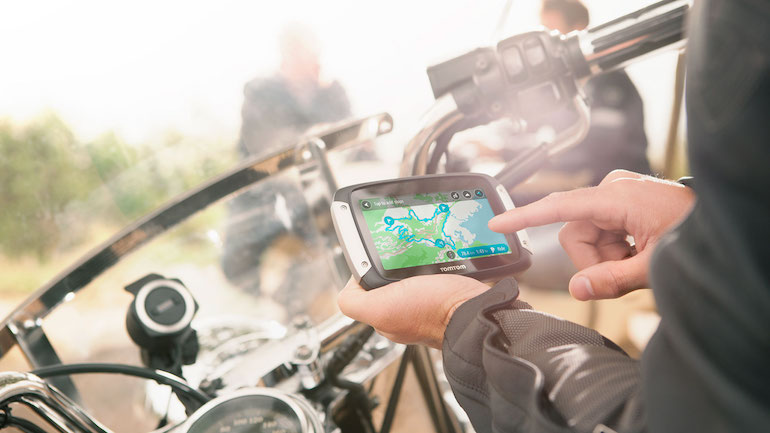
The first thing to get out of the way in reviewing the TomTom Rider is to determine exactly which device we're talking about, since it goes by different names. The Rider 40, Rider 400 and Rider 410 are all the same device in terms of hardware and functionality; the numerical differences identify the maps offered.

As far as I can tell, the only version sold in the United States is the Rider 400. It comes equipped with maps for the United States, Canada and Mexico. Buy the Rider 410 in Europe, though, and you'll end up with maps for the entire world, which strikes me as the better buy.

Either way, TomTom promises "lifetime" updates for the maps, which is a dubious claim because TomTom isn't very specific as to what it means by the word "lifetime." It's not your lifetime, nor even the lifetime of the physical device. Instead, "lifetime" roughly translates to: "as long as we feel like it." Or, in TomTom's words, "the period of time that TomTom continues to support your device." How long is that period of time? Dunno. Maybe a year, maybe 10 years, maybe a week. There's no clear information that might make you feel better about paying so much for a product that does something your phone does.

Worth The Cost?

That said, I prefer a motorcycle-specific GPS to a phone for a number of reasons. Firstly, because I like to go places that aren't in cell range. Shortly before buying the Rider last year, I tried mounting my LG G4 to my bike and using Google Maps. The phone got confused pretty much as soon as I left the city, went hot, then gave up and shut itself off. Additionally, phones aren't weatherproof, nor necessarily designed to tolerate the vibration they're subjected to when mounted on a bike.


Lack of weatherproofing is also the reason I chose the Rider over a less expensive car GPS; it's impossible to escape the rain in Britain. If you live somewhere dry, a car GPS may work for you.

Unique Features

Perhaps to discourage fair-weather riders from doing such a thing, TomTom offers a handful of features unique to the Rider for motorcyclists. Most notably, there's the clumsily named "Plan A Thrill" feature. It lets you arrive at a destination via the most interesting route available. You can even choose different levels of hilliness and twistiness.

I've found the feature to be generally disappointing. For example, asking it to navigate from my house to the headquarters of Brecon Beacons National Park, about 40 miles away, I am given a route that takes upward of three hours and wends through every urban center in the space between. It's twisty, yes, but hardly thrilling.

More useful, though, is the real-time traffic feature. Pairing with your phone, the Rider can alert you to delays up ahead, give you an idea of how long those delays are and will occasionally reroute you. Note my use of the word "occasionally," sometimes I feel it's too willing to put me in traffic.

Nonetheless, it's one of my favorite features. If nothing else, it gives me a sense of how long the traffic is going to last, with the status bar indicating how long I'll be delayed and how far I am from the incident that's delaying me.

Mounting

The Rider attaches on handlebars or accessory bar via RAM mount. I made a redneck accessory bar for my Suzuki V-Strom 1000 using plastic tubing and a shower curtain rail — it's hilariously ugly — but I've attached the Rider to the handlebars of bikes I've tested for RideApart and found I'm usually able to put the screen in or near my line of sight.


The mounting base can be wired to the bike's battery to ensure the device stays charged. If you're unwilling to mess with wiring, my experience is that it will last more than five hours on a charge. 

Menu and Keys

Timing it, the Rider takes a full minute to boot up. Once awake, it's easy enough to use. The menu is simple though not immensely intuitive. A recent software update has helped things a little in allowing you to choose where icons are placed.

The touchscreen keys work most of the time, but you haven't got a snowball's chance in hell of pressing them if you're wearing winter gloves. Even summer gloves can be too much for smaller keys. Meanwhile, I've had the touchscreen get confused by heavy rain.

Related to the above, the system of sub menus can be annoying. For example, in the main menu there is an option that says "Gas Station." Think about what you'd want from that option. The nearest gas station, right? Instead, you're presented with a map too large to be of use. You have to click and zoom in on the map to see how close stations actually are to you, or you need to click to a list view and select a station that way. You have to click again to choose a station, and again to set a route, and again to initiate that route. All this clicking is too involved to be done on the move, usually needs to be done gloveless, and fails to understand the urgency inherent in a person's having chosen the "Gas Station" option in the first place.

On-Screen Information and Directions

The Rider's map display is a strength over similar GPS devices. It's clear and accurate. The arrow indicating position never lags. At key points, such as motorway exits, the map will automatically zoom, telling me which lane I need to be in. The screen is bright and easy to read even in bright sunlight, and switches automatically to a less retina-burning night view once sunset hits.


You can choose to display the map in horizontal or portrait view simply by turning the device (the Rider's base allows you to click between positions with minimal effort). I prefer the horizontal view because it offers a status bar that shows distance left to my destination, estimated time of arrival, and indicates key points of interest—.e.g, traffic congestion, rest areas or gas stations — that I will encounter ahead. The device also alerts me to the presence of speed cameras, stoplight cameras and high-accident areas.

Direct Route

My primary use for the TomTom Rider is getting from point A to point B. This is a simple process of searching a location or address, selecting it and initiating the route. Most of the time this works. However, in Italy I learned that the way Italians write their addresses is not the way TomTom thinks they should be written.

An annoying quirk of the Rider is that it will initially tell you the distance to a destination as the crow flies. It's only when you actually initiate the route that you learn how many miles you'll be riding. You can also set a location by painstakingly dragging the map, zooming it in and out, and clicking on a specific point. I tried this once; it was so frustrating and awkward I almost threw the device off a cliff.

You can choose a number of options in how the route is determined, e.g., fastest route, shortest route, most eco-friendly route, twistiest route, etc. You can also choose to avoid highways and tolls and so on, but it's not possible to set an upper speed limit. Older car TomToms had that feature, and I think it would make sense on the Rider; imagine the naked cruiser rider who'd like to avoid the turbulence that comes from riding above 60 mph.


Route Planning

When it comes to more involved route planning, the Rider offers a "lifetime" subscription to Tyre Pro, an interactive route-planning software that doesn't interact with Apple products. So, I've never used it.

TomTom's MyDrive website allows you to plan a route with multiple destinations, but you can't specify roads. It's also a glitchy process that only seems to work on 1 out of 5 attempts. The good news is the Rider has no problem accepting GPX files. Which is to say, once you work out the circuitous process of downloading GPX files onto the device it has no problem using them. So, if someone else creates a route for you, or you're lucky enough to be going someplace recommended by Ride magazine, everything is peachy.

Recalculating

The Rider is generally pretty quick to serve up alternative routes if you miss a turn or decide you don't like the look of something (perhaps the road is flooded or, as happened to me in Mid-Wales recently, occupied by a wedding party on tractors). The chances are 50/50, though, that the recalculation will either desperately try to put you back on the exact same route, or run you 30 miles in the opposite direction up an unpaved mountain pass –– I've been subjected to both scenarios.

Meanwhile, alternative routes as a result of live traffic information are suggested a little late in my opinion. On the motorway, an alternative route will be suggested only half a mile from the necessary exit. Which means scrambling to get into the correct lane in a relatively short space of time.


The system is better than it used to be, though. When I first bought it, a message would ask if I wanted to take the alternative route and I had to click to accept. See above about the Rider's functionality when wearing thick gloves. Now, the potentially new route is simply displayed in flashing green and the status bar indicates how much time the GPS thinks you'll save; no need to touch the screen, just follow the route or ignore it.

Bluetooth

The Rider offers Bluetooth pairing, so you can hear the GPS instructions if you have a headset. I don't have such a device; there are already too many voices in my head. And I have concerns as to how well it would work.

The GPS also uses Bluetooth to pair to my phone for traffic updates and I know it struggles to maintain connection. I have heard from someone with a Sena SMH10 that the same thing happens with his headset: it connects and disconnects constantly.

Apparently you can set up the Rider to serve as a kind of interloper between your phone and headset, so that when you receive a call you'll see it on the screen and can press a key to accept the call. I'm not sure I get the point of this. See again what I said about functionality when wearing thick gloves. Plus, Bluetooth headsets are designed to allow you to answer calls pretty easily anyway.

Final Verdict

If you haven't guessed, my overall opinion is that the Rider isn't worth the money that TomTom asks for it. At the same time, however, I think it's a device worth owning. I'm not aware of a better motorcycle GPS, and ultimately I find the Rider to be incredibly useful. That is primarily because of the increased sense of freedom it gives me.

One of my favorite things to do is head out with no particular destination in mind, allow myself to get completely and utterly lost, then click on the Rider and allow it to guide me home. That provides a psychological safety blanket that has made me far more adventurous and daring than I am naturally inclined to be. I've so far felt free to wander in nine different countries with this little device always there to help me out.

Cost: US $499 (£319 / €399)
Used for: 11 months/ 10,000+ miles
Info: TomTom.com

–––––––––––––––––––––––––
–––––––––––––––––––––––––

This June I'll be taking part in the Royal British Legion Riders 1000 ride, helping to raise money for the Poppy Appeal. Please check out this page to learn more and donate in support of British veterans, currently serving military personnel, and their families.

––––––––––––––––––––––––
––––––––––––––––––––––––
ADSENSE HERE

Electric motorcycles have arrived; Have we?

ADSENSE HERE

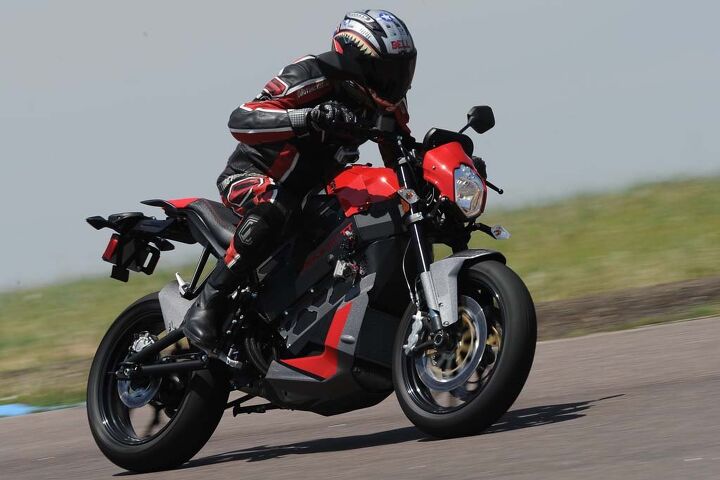
Not too long ago, I got a chance to spend a day tearing around on a Zero DSR. It was the first time I had ridden an electric motorcycle and I came away surprised at just how much fun an e-bike can be. 

When I returned home to the palatial Cope estate, I couldn't stop singing the bike's praises to my wife. My time with the DSR had convinced me that electric motorcycles are "there," I told her.

So often when motorcyclists discuss electric, we insist that the technology — specifically, the available range — hasn't arrived in terms of practical usability. But my own experience had shown that getting 120 miles from a full charge was entirely possible.In fact, that estimate may be a little conservative. Zero claims 147 miles of range, and I think that's realistic.

Either way, it really is "there" in terms of distance that the average American motorcyclist rides on any given day. Anecdotally, I'm thinking of the riders I grew up around in Texas and Minnesota. In my mother's hometown of Lake Jackson, Texas, there's a 4.5-mile stretch of road called Oyster Creek Drive that runs the width of the city. On nice evenings, dudes will get off work at the Dow plant, drive home, then hop on their Harley-Davidson Street Glides and Street Bobs. They'll rumble up and down the strip once or twice, stop for a beer downtown, and be home in time to watch the news.

At most, one of those dudes will clock up 20 miles in a night. On a Sunday afternoon, if it's not too hot, he might ride the 15 miles out to Surfside Beach, putting in roughly 50 miles that day with some back and forth. If he goes any further than that, though, he'll take his truck. The days when his mileage would truly exceed a Zero's current range are few and far between.


Within the world of motorcycling websites like The Motorcycle Obsession and RideApart, it may sound like I'm being insulting to those dudes. Because, after all, all of us are super-hardcore awesome riders, doing an Iron Butt a day in dirt while getting a knee down. That's certainly the impression people like to give in comments, at least. And people on the internet never lie.

But there's evidence to suggest that outside our interwebs fishbowl, the American motorcycling experience allies more closely to that of riders in Lake Jackson. According to the 2015 Powersports Business State of the Industry Webinar, the average American rides just 2,809 miles a year. That's 234 miles a month, or less than two full charges for a Zero DSR.

Meanwhile, over here on the other side of the Drumpf wall, the average UK rider manages roughly 7,500 miles annually. That's still not very much, and an electric motorcycle remains viable. Charge points are to be found in any number of places, including "services" (rest areas with gas stations and fast food), which are located every 20-40 miles on the motorway network. Some charge points are even free.

And, of course, all that overlooks the true purpose of most electric motorcycles: commuting. Easy to ride and almost totally maintenance-free, electrics are incredibly well-suited to urban/suburban use and equipped with a range that will meet most people's needs.

Many moons ago, when I was stuck living in Southern California, I had a daily commute of 40 miles each way from San Diego to Carlsbad. It was a painfully long drive. I listened to learning CDs in my car, and within a year had become fluent in Welsh (which is more or less how I ended up moving here). That 80 miles a day is within a Zero's ability, though –– even ignoring the possibility of plugging in the bike while at work.


"It's silly that more people aren't riding electric," I told my wife. "It just makes so much sense. A bike like that, you just get on and go. It's easy; you're more aware of your surroundings. It's such a great experience and it really is do-able in terms of range."

"You should get one," she said. "You could trade in your Suzuki."

"Ah... uh... oh... well, you know, it's not really..." I stammered. "I mean, the way I use a bike, that's different. There are times when I have to cover a lot of distance and..."

"You just said it would be possible to get up to Scotland in a day," she said, her voice now picking up the West Country lilt she uses when shooting holes in my arguments.

"I did, yes," I huffed. "It would be a long day, though, and would require some judicious planning."

"You're not capable of planning?"

"No. I mean, yes. I am. I could. But it's not a bike that fits my lifestyle. My motorcycle use, as a moto-journalist, is different. An electric bike wouldn't really work for me."

"Hmm," she said. "It sounds like you're saying everyone else should be doing something, but you don't want to give up your rumbly toy."

I still think my particular case is unique. A motorcycle is my only means of transportation and there are times when I have to travel pretty far for professional purposes. To test ride the Zero DSR, for instance, I had to ride 120 miles to Birmingham; that's a 240-mile day. Last week I had to travel to Peterborough, England, for a meeting –– some 400 miles round trip. But I do think my wife may have stumbled upon something. Perhaps the biggest obstacle for electric motorcycles isn't range or cost, but motorcyclists' unwillingness to change.


Thinking about this, I started to look at many people's arguments against electric and I was struck by their similarity to the arguments people give for not riding at all.

No doubt you've been in that situation where you mention riding to a friend or coworker, who suddenly gets a dreamy look in his or her eyes and says something like: "Yeah, I've always wanted to get a motorcycle."

To which the obvious answer is: "Well, why don't you?"

Unless you're being wheeled around a care home it's not too late to start riding.

But rather than concede to this impeccable logic the person will offer a profusion of excuses. Excuses that mask his or her true reason for not riding: he or she can't be bothered to learn how to do something different.

Essentially, that's what those who refuse to consider e-bikes are doing. They're muddying the water with a thousand excuses, trying to hide the simple fact that, golly, they just don't want to ride electric. Motorcycling is an activity that requires certain concessions of inconvenience, but they're unwilling to make these particular concessions.

I guess I shouldn't say "they." It's more appropriate to say "we." Because my wife is right – although I'm happy to take the high ground of telling people they should help save Earth by riding electric, my actions say I'm unwilling to join them.


I make my excuses about range and cost (moto-journalism isn't the most lucrative career), but quietly I know that if I didn't personally have those obstacles I still probably wouldn't be buying electric.

Probably. Maybe I would. It's a lot of fun, after all. I don't know. The fact is, although I think electric motorcycles are "there," I'm not entirely sure that I am.
ADSENSE HERE

Ride review: Zero DSR

ADSENSE HERE

Here are some words strung together: interior permanent magnet, surface mount permanent magnet, graphene matrix. You'll hear words like these when someone tells you about a Zero motorcycle. But if you are like me, your eyes will glaze over because those words don't create pictures in my mind of what part they will or won't play in my sitting on a motorcycle and shouting: "Wheeeeeeee!"

After all, that's what really matters: The joy of being on a motorcycle. If you want technical words, go read someone else's review. If you want to know about the incredible "Wheeeeeeee!" that the Zero DSR delivers, read on.

The Past and Future of Motorcycling

My experience with the DSR starts in Birmingham, England, which is home to Zero's only UK dealership, Streetbike. Birmingham has strong ties to the glory days of motorcycling. Triumph, Norton, and BSA are among the brands that started in "Brum." They've moved on, but motorcycling still runs deep. Birmingham is home to the National Motorcycle Museum, and the UK's largest motorcycle show, "Motorcycle Live."

There's symmetry in the fact that Zero, a manufacturer many see as representative of motorcycling's future, has found a home in a place so intricately linked to the motorcycling past.

Birmingham is a sprawling urban area, and I don't really know how many miles I'm going to rack up today, so I set the DSR on Eco mode. The DSR has three riding modes: Eco, Sport, and Custom. Eco helps conserve energy and thereby ensures longer range. Sport allows you to enjoy the full whump of the DSR's 106.2 ft. lbs of torque. Custom is set with a smartphone app, allowing a rider to choose speed, torque and regenerative brake settings.


The DSR is a twist-and-go bike— no clutch, no gears to shift —and it takes a moment for my head to wrap around this concept.

"Am I moving?" I ask aloud.

The lack of engine noise has also confused me. I touch my feet down, feel them drag on the street. Yes, I'm moving. I glance in one of the bike's well-placed, decently sized mirrors... there's a Land Rover there. I hop the bike up a curb onto the sidewalk, and give myself a chance to regroup.

"OK, it's a motorcycle," I tell myself. "It will go at motorcycle speed. Let's pick up the pace."

Off the curb and back into traffic. Eco mode neuters the DSR noticeably, but twist the throttle all the way back and there's the oomph to beat most cars off a stoplight. This mode reminds me of a 125cc commuter. That's not a ringing endorsement, perhaps, but there's enough here for city traffic.

It doesn't take long to get used to the absence of gears and clutch. Soon it's feeling natural. Feeling fun. I mean, golly, is this thing ever fun! With a claimed weight of 418 lbs., the DSR isn't featherweight, but its bulk is distributed evenly and the bike is well-balanced. I wouldn't use the word "flickable," but on this bike, I feel comfortable hitting some pretty tight gaps as I lane split.


BSA's Beginnings

Birmingham's Gun Quarter is so named because it was once a bustling hub for arms manufacturers— one of which was the Birmingham Small Arms Co., or BSA. The company expanded into motorcycles in 1910 and by 1951 had become the world's largest motorcycle manufacturer. BSA had a devoted following, but not so devoted that the company could survive managerial bumbling. And by 1972, it had given up.

No one's making guns in the Gun Quarter these days and all the old alleyways are gone. It's just office buildings and there's no sign of where BSA might have been. Again, I ride up a curb onto the sidewalk. I step off the bike and take a moment to really look at it, to take it in.

The DSR is proper-sized: it looks (and feels) like a motorcycle. For some reason, I had been expecting a glorified mountain bike: small, rickety, whining like an RC car on Christmas morning, but no, this thing is solid. You don't have to apologize for it. Zero's models seem to suffer the Honda curse of not being photogenic. But in person, build quality is good. Fit and finish is up to snuff, and all the components look sturdy. It doesn't look plasticky or cheap, and the Pirelli MT-60 tires make it look kind of...cool.

I'm not a fan of the swingarm, and I'm concerned the tiny tail light, which seems to attract road muck, may— like the headlight—not be bright enough. The digital dash is simple and easy to understand, and switchgear is intuitive.


Because there's no need for gas, the DSR has a storage compartment where the tank would be. It holds my bottle of water, camera and map of Birmingham, but wouldn't fit a full-size helmet. The compartment's lid is of the soft luggage sort— accessed via a zipper that keeps getting stuck.

It's better, then, to fill that space with Zero's optional Charge Tank, which allows you to use charging stations at IKEA. In Europe, IKEA's charging stations are free for customers. If I owned an electric vehicle I would eat lunch there every day: "These meatballs are payin' for themselves!"

No More Norton

I throw a leg over and get ready to head to my next destination. At 6'1'', I have no problem putting both feet flat on the ground. The DSR might not be ideal for shorter riders though: to my knowledge, the seat's 33.2-inch height is not adjustable.

As I zip around corners and weave through clogged city traffic I develop a real love for the lack of engine noise. I feel more alert, more connected, and more at ease. And being able to make better use of my hearing seems to heighten other senses. As I roll toward the site of Norton's original HQ, my olfactory nerves are working over time.

Norton set up shop at 320 Bradford Street back in 1898 and began building motorcycles four years later. Pretty soon, the company was racking up wins at the Isle of Man TT, an event that Norton would dominate into the 1950s. But it, too, went south in the '70s. After several decades in limbo, and some hefty UK government investment, Norton now seems to be back, sort of, producing high-priced boutique bikes in low numbers.


But 320 Bradford Street is just a gravel parking lot in a part of town that my nose tells me is home to a number of spice warehouses. Birmingham is one of Britain's most culturally diverse cities, and that means amazing food. Residents are particularly proud of the Indian food found here, and the smells surrounding me help decide what I'll have for dinner.

But first I want to travel to Meriden, the village where Triumph got its start.

Triumph in the Center of England

For centuries, Meriden proclaimed itself as the exact geographical center of England. In 2013, geographers remeasured and gave the title to a field in the middle of nowhere. Now Meriden is just a suburb village near the Birmingham airport.

Triumph set up shop here in the late 1800s. The company followed a similar trajectory of success and failure to BSA and Norton, and for a while even shared the same boneheaded management. Where Triumph excelled, however, was in the US market. Triumph gained a strong enough following that its name weathered decades of poor quality, bad decisions, and financial misery until falling into the hands of businessman John Bloor in 1984. These days Triumph is again a premium brand, arguably on par with BMW.

In the center of Meriden is a small village green, which I decide is a good place to take pictures. As I ride onto the grass, I'm struck by a particular advantage of an electric motorcycle. No noise, you see, means bystanders aren't upset by its presence. An old couple on the green doesn't care that I'm here—they even offer a convivial hello as I ride past.


Can you imagine doing this with an internal-combustion-engine motorcycle? They'd be phoning the police! This thing is awesome.

Back on the road, it gets more awesome when I click the DSR into Sport mode. This is the "Wheeeeeeee!" part, and all 106.2 ft. lbs. of torque are delivered almost instantly. Power delivery is smooth, to such an extent I'm unable to get the bike to wheelie (better riders than me could manage it), but ohmygosh does it accelerate quickly. REALLY quickly.

I find some quiet road and open up, accelerating from 0 to 88 mph in just seconds. The DSR is apparently limited to a 90-mph top speed, but I can't ever crack 88. Something appropriate about that: the Delorean in Back to the Future had to hit 88 mph in order to time travel. I'm on the future of motorcycling.

And when you sit on a bike that accelerates this quickly, this effortlessly, that doesn't feel like hyperbole. This is the future. Heck, this should be now. Why are we wasting our time with noisy, smelly, clunky machines?

Putting the DSR into Sport unleashes the hooligan in me. I'm whooshing ahead of traffic at every light. No, I'm teleporting. I'm like Nightcrawler from X-Men and I'm having a ridiculous amount of fun. This thing is so easy to ride and it's...So. Much. Fun. This is the crystallization of the motorcycling experience: all of the "Wheeeeeeee!" accessed just by twisting the grip.

The DSR has plenty of "whoa" to counter that go. Regenerative braking helps return energy to the battery and will feel natural to a V-twin rider. Single discs front and rear provide more immediate stopping power. ABS is unobtrusive.


Toward the end of my day, having spent several hours on the bike, my keester is alert to the lack of padding in the DSR's seat. Not all-day comfortable, but this isn't a bike you'll be riding all day. So, padding's not really an issue.

Whereas the question of battery range will be an issue for some. Zero claims this DSR model (the ZF13.0) is capable of covering up to 147 miles on a charge. Based on my experience, I would expect less—perhaps 120 miles, which is still pretty good. No, you can't ride the Trans-America Trail on the thing, but you know, that's also true of a Harley-Davidson Forty-Eight. It's ideal for urban and suburban use.

Without the optional Charge Tank, it can take roughly eight hours to get a DSR from empty to full. You do that simply by plugging it into a wall socket, just as you would a TV or any other appliance. With the Charge Tank, time is reduced to a little under three hours.

Belt-driven and lacking gears or any engine bits, the DSR is about as low-maintenance as a motorcycle can possibly be. Zero claims the power pack has a lifetime use of at least 331,000 miles.

In the United States, the DSR starts at just shy of $16,000. That's not exactly easy on the wallet, but federal tax credits can take away some of the sting and reduce the price to $14,395. Whether that's a fair price is up to the individual rider. I wouldn't scoff at someone willing to pay it, but I can't help but observe that one could buy a Suzuki V-Strom 1000 Adventure for $400 less.


They're not really comparable bikes, but the latter is the one I personally own — the one I rode to Birmingham on. The one I've returned to now as I start toward home.

"Wait, something's wrong with my bike," I think as I start it up. "Something not right."

After a second I realize what the "problem" is. The 'Strom has an engine, and it's making noise.

(Originally published on RideApart)
ADSENSE HERE

Good news, bad news: Moto predictions for 2016

ADSENSE HERE

(This post was originally published in another form on RideApart)

Prediction 1: THE AMERICAN MOTORCYCLING RENAISSANCE

The good news: We're hitting a renaissance of American motorcycling. There are strong rumors of Indian delivering a bike this year called the Chief Springfield, which will be based on the existing 1811cc V-twin platform. It also seems inevitable that the Scout and Scout Sixty will head in different aesthetic directions.

Meanwhile, Victory has promised a 1200cc liquid-cooled V-twin for 2016. Based on the Combustion and Ignition concepts of last year, the final product will likely disappoint those hoping for the super naked, of which Victory is totally capable—but you know, baby steps. And remember that last year the company also trademarked the name "Victory Charger" for use on an electric bike, which will almost certainly be more than just a rebranded Brammo.

Elsewhere, it seems Harley-Davidson is (slowly) phasing out the Twin Cam 103, and its Street models will need updates (brakes, emissions) by the end of the year if they're going to continue to be legally sold in their target European markets. And Motus has finally (really, no for real this time—we mean it) started production of its MST and MSTR sport-touring motorcycles. Yes, in terms of electronics, the bikes are roughly 15 years behind every other sport tourer on the market (while still costing more), but they are a huge step forward within the American arena.

And therein will be the story of 2016: All of the above will combine to make it year one of a renaissance that will eventually see American motorcycle companies leading in more than just intangibles. 


The bad news: EBR and, by extension, Erik Buell will play no part. Maybe one day, many decades from now—in a spirit similar to the modern affection for Nikola Tesla—crowdfunding campaigns will ensure statues of Buell are erected at all of Wisconsin's major border points. But in the meantime, he's damaged goods. From a corporate perspective, the sum of Buell's career is that he has unintentionally proven there is no interest in American sportbikes. Even companies willing to push against that assertion will steer clear of Buell's bad mojo. 

Prediction 2: THE RISE OF ELECTRIC MOTORCYCLES 

The good news: Thanks to Polaris' acquisition of Brammo last year, Victory can awkwardly lay claim to the title of "First Major Manufacturer with a Production Electric Motorcycle." It's a title that will be held more securely if the company delivers the aforementioned Victory Charger in 2016. But it will have to do so quickly because Yamaha, Honda, BMW, Kawasaki, Suzuki and Harley-Davidson have all flirted with the genre.

And it seems a few of those are quite close to committing. I suspect we'll have a better idea of who's really willing to take the plunge this summer, when the Isle of Man TT Zero takes place.

Meanwhile, established e-bike manufacturer Zero will benefit from tax breaks in the United States, as well as its return to certain European markets from which it retreated a few years ago. And Italian firm Energica is in the process of expanding both its business and its lineup.

This all suggests that the long-predicted "Future of Motorcycling" may have finally have arrived.


The bad news: If the "Future of Motorcycling" has arrived, I think it will still take some cajoling to get motorcycle buyers to the same point. Motorcyclists are notoriously conservative and susceptible to hoodoo beliefs. A company may be able to deliver an electric motorcycle that will 100 percent satisfy a given rider's needs, but that's no guarantee that said rider will buy it, especially if oil prices stay low.

Depressingly, if the two sides can't meet soon it will probably result in the concept of e-bikes being shelved for a while.

Prediction 3: FORCED INDUCTION AWAKENS

The good news: Suzuki, Kawasaki and Honda are all known to be working on some form of forced-induction (turbocharged or supercharged) engine. Forced induction essentially means you can get liter-bike power from a 600cc machine while retaining the fuel efficiency of the latter.

All four of Japan's big manufacturers toyed with the concept in the 70s and 80s, but eventually gave up due to issues with turbo lag, heat, cost and reliability. However, the nearing implementation of strict Euro 4 emissions regulation has revived the concept. Most recently, we've seen it used in the Kawasaki H2 and H2R, but 2016 may be the year in which we see forced induction used in slightly more real-world applications (i.e., bikes that won't rip your arms off).

Suzuki seems most likely to get there first, having revealed its Recursion concept a few years ago, and a production-ready turbocharged engine at last year's Tokyo Motor Show.


The bad news: Without a doubt, Suzuki will pull the most Suzuki thing ever and put its new, fantastico engine in an all-rounder that possesses the visual excitement of a half-eaten bowl of Cheerios. Some time later, Kawasaki will deliver a bike that is less comfortable, less useful, and sickeningly green; and moto journalists from Santa Monica to Sidney will soil their pants in giving it praise.

Last to the party will be Honda, which will place its forced-induction engine in an automatic-transmission and airbag-equipped motorcycle that delivers just 40 hp and looks like a manatee, but has fuel economy of roughly 700 mpg. Some weird Austrian guy will buy one, and thereafter, spend 20 years traveling the world without ever needing to replace a part.
ADSENSE HERE

Keyless start makes you a bad ass

ADSENSE HERE

I can remember when key fobs started showing up in cars, allowing keyless entry and keyless start. It baffled me. Why, I thought, would such a thing be necessary or even all that desirable? 

Is the world full of silent sufferers of repetitive stress injury whose lives are made hell by the act of taking keys out of their pocket and placing them in the steering column? Are we so short of problems that the greatest minds of our generation absolutely needed to remedy this problem?

Key fobs just struck me as stupid and inherently susceptible to issues that don't apply to the traditional old bits of metal that are keys. Water, for example. I have on very many occasions gone swimming with my keys in my pocket. Not by accident, but because it makes sense.

At Barton Springs, in Austin, Texas, for example. Leave my wallet in the car, tie my car keys into the waist tie of my swimming trunks. Boom. No worries. But if you've got a battery-powered key fob, you can't take it into the water with you. You can't keep it on your person. So, you can't relax and enjoy splashing around.

Instead, you have to wrap it up in the towel that you're leaving creekside and hope that no one saw you wrapping up said fob, hope that no one will want to steal a towel just for japes, hope that none of the half dozen dogs that are playing in the creek decide to unravel your towel. And you're left to always be craning your neck to make sure that the towel remains in sight, never willing to put your head underwater, never really venturing too far into the creek or having any fun.

Connected to this, a fob isn't the sort of thing you'd want to risk throwing to someone. Ever done that? I have. You're up on the third floor or some such thing and your wife says: "Hey, can you throw me the keys, I need to get something out of the car."

So, you toss them down to her and because she has the eye-hand coordination of a drunk and blind sloth, the keys never even touch her hand and go straight to the pavement. Do that with a fob and you'll end up with smashed bits of plastic and an urgent phone call to the dealership.

Even if you don't ever get the fob wet or drop it from great height, there's still the reality of a battery and its finite lifespan. A metal key that's been sitting in a drawer for 60 years will still function as it did when it was first cut. If you live in a place that gets ungodly cold, like Minnesota, that key will still get you into the shelter and safety of a car even if the car's battery is dead.

So, by and large, my opinion of key fobs has always been negative. They strike me as an unnecessary gimmick, answering a question no one asked and creating problems from a previously problem-free aspect of driving (a).

Needless to say, as the keyless-start trend has made its way to more and more motorcycles it has been met by more and more eye rolling on my part. I have definitely gone swimming with my motorcycle keys in my pocket (on those times when I've remembered to bring a swimming trunks and not just dived in completely naked). I have definitely dropped my keys.

True, I have also accidentally left my key in the ignition and walked away, only to realise my mistake upon returning to the bike half an hour later. And, yes, the other key on the key chain (the key to my U lock) has bounced around in the wind to the extent that it has scratched and chipped the metal of the steering column. But these issues still haven't really validated keyless bikes in my mind.

Generally, when I've seen keyless start listed as a feature, I've thought: "Give me heated grips instead. They're cheaper, more practical and less critical should they fail."

But then something happened that completely changed my mind

.
There's a dude in Cardiff who rides a Harley-Davidson Iron 883 and parks it wherever the hell he pleases. He works in the city centre, I assume, because that's where I always see his bike -- always in some place that motorcycles aren't really supposed to go (b). This in and of itself makes him cool. Cardiff city centre benefits from second-hand cool as a result. I feel this should be written into the city's improvement plans: if you have a cool bike you are allowed to park it anywhere you damn well please. There's something pretty awesome about seeing a Harley just cooling under a tree in the Hayes, or Royal-Enfield Continental GT serving as backdrop to some street performer.

This particular Iron 883 has aftermarket exhaust that can be heard from a fair distance, but up until recently I'd never seen the guy who owns it. Then, a few days ago, I was walking through city centre when I heard the bike approaching.

FAWOOM. I turned to see it rolling up a bus lane and onto the pedestrianised area outside Central Library. Next to the bicycle racks, where a few other motorcycles were parked, he stopped and performed the coolest manoeuvre I have ever seen.

In one single, fluid action, he kicked down the side stand, thereby cutting the engine, stepped off the bike and walked away, pulling off his helmet and never even glancing back at the bike as he strut into John Lewis.

Yeah, the story is ruined somewhat by the fact he was strutting into a John Lewis, but ignore that bit. The keyless fob in his jacket meant he was able to just get off the bike and walk away like a movie star. It was such a cool, beautiful move that I felt weak in the knees. It made me want to run out and get an Iron 883 just so I could ride around pulling the same trick.

And deep down in the recesses of my mind a thought formed: "Man, keyless bikes are bad ass."

____________________

(a) OK, not totally problem-free, as people from the Upper Midwest can attest. It is possible to have your lock freeze in severely cold weather and for the key to snap as you're trying to undo that lock. But that's a problem that can be overcome by the simple act of paying attention to what you're doing: if the lock feels frozen, don't try to force it.

(b) Though, there's nothing to say specifically that he shouldn't be parking his bike there. Peculiarly, if you look at the Vehicle Excise Duty certificate (often incorrectly referred to as "road tax") for a motorcycle in the UK, you will see that the government in its infinite wisdom has classed the machine as a bicycle. Running with this, many of the ballsier riders in the UK apply the same parking thinking to their motorcycles as one would a bicycle -- e.g, on the sidewalk, chained to a pole, etc. Only London has cottoned to this trick and outlawed it. Everywhere else, it is left to police discretion as to whether your bike is causing a problem.
ADSENSE HERE

What I Want: Harley-Davidson LiveWire

ADSENSE HERE
Don't hate on the future: the Harley-Davidson LiveWire
We seem to have fallen into an unhappy pattern in the modern era: any time anything happens –– anything at all –– there is an instant chorus of vicious critics.

Take Ann Coulter, for example. If you live outside the United States and have never heard of her, count yourself lucky. She is an awful and ridiculous person who goes out of her way to say awful and ridiculous things. Recently, while the United States men's soccer team was finding success in the World Cup she declared it was "a sign of the nation's moral decay."

Obviously, she is simply saying nasty things to get attention. Sadly, she's nowhere near being alone in such behaviour. We have built a culture in which vitriolic criticism is instantly issued for all things. The new, the old, the different, the same, the big, the small, the beautiful, the ugly, the stupid or the brilliant –– it all gets met with a tidal wave of harsh words on the internet.

But listen, y'all: sometimes a thing is just good. Sure, it's not perfect. Nothing is. But overall, it's so innately good that any fault-finding is really only a reflection of the critic's flaws.

Such is the case with the Harley-Davidson LiveWire. When America's oldest continuous motorcycle manufacturer –– renown and often lambasted for its restrained approach –– is on the verge of becoming the first major OEM in the world to deliver an electric motorcycle, that is good. It's good for motorcycling, it's good for the environment, it's good for green technologies, it's good for America, it's good for Harley-Davidson.

This is more than just "good". It is big. Actually, no. Let's move beyond the gentle superlatives and call this what it is: a potential seismic shift in motorcycling. The LiveWire is the Reformation; it is the Industrial Revolution; it is Neil Armstrong setting foot on the moon; it is the point at which everything changes.

"[My] time on the LiveWire was fleeting but I still came away with a profound sense that I'd covered the biggest motorcycle story of my life," wrote Motorcycle USA journalist Mark Gardiner in a recent review.

Gardiner isn't the only one. Every review I've seen has expressed a sort of wild-eyed giddiness for this almost-certain future offering from Harley-Davidson.


Out of the blue


If you've been out of the loop for a while, let me get you up to speed on what everyone's so excited about. A few weeks ago, pictures emerged of Scarlett Johansson riding a rather unique motorcycle on the set of an upcoming Avengers film. Or, well, Scarlett Johansson's somewhat boy-faced stunt double. (Take a good look at this picture and you'll see that the rider's "hair" is actually a very cleverly disguised helmet) What's important, though, is the bike. Carrying the Harley-Davidson badge, observers noticed that the bike was just a little too polished to be a standard movie-set machine.

Those road-compliant yellow reflectors, for instance. The mirrors. The overall finish. The fact that the bike's name –– LiveWire –– was emblazoned on the motor housing. All these clues pointed to an actual bike that someone actually intended to produce for the mass market.

That's not so strange. Harley's pulled this sort of thing before, cleverly working its Street 750 into Captain America: Winter Soldier before ever announcing that the bike existed. But what was different here was that the bike being ridden by Johansson's stunt double was so very much not like a Harley-Davidson. It looked a little more like a Ducati Diavel with its styling. It had a sit-up-and-beg seating position. And –– least H-D-like of all –– it was an electric motorcycle.

An electric motorcycle. From Harley-Davidson.

Cats and dogs living together, people. And before we could recover from having our minds blown at the very thought of such a thing, Harley-Davidson announced that the rumours were true. They have indeed embarked on an electric motorcycle project.

That's what they're calling it right now: a project. They go out of their way to point out that the bikes are not for sale. Yet. But they have produced several dozen of them and will be touring H-D dealerships in the US and Europe over the next year or so, offering test rides and "gauging customer feedback."

That's probably marketing speak for "generating consumer demand". In his article, Gardiner says the LiveWire is just too polished, too ready to simply be a project. He says most moto-journalists expect an announcement on the LiveWire going into production will come within 18 months. You know, about the time that upcoming Avengers film will be released...

A new era


So, take a moment to let all this sink in. All of it. Ignore the internet hater machine and just think about the countless implications of the LiveWire. This is so very big, it's hard to know where to begin.

Obviously, we've had electric motorcycles for a while. Not too long ago, I wrote a post in which I stated my belief that electric motorcycles would be a part of the mainstream within 10-20 years. So, Harley-Davidson's not doing anything new there. Indeed, with the LiveWire's current claimed range of 55 miles on a charge (a) it is a little behind the curve of Zero, Brammo and the like.

The seismic shift, however, comes in the fact that it is an electric motorcycle from Harley-Davidson –– a major, worldwide OEM. Existing e-bike companies can't touch the dealer network, publicity strength or clout of such a major player. There's a possibility that Yamaha could release its PES-1 before the LiveWire, thus earning it the distinction of being the very first major OEM to offer an electric motorcycle, but I would argue that the release of the LiveWire will have greater impact.

Harley-Davidson understands better than any other OEM the importance of intangibles like emotion, experience and impression. Performance and cost always play a part in our motorcycle-buying decisions, but Harley-Davidson gets that how the bike makes us feel is just as important, if not more so. And Harley-Davidson equally has the power, and the marketing muscle and know-how, to shape these intangibles. Yamaha (or Honda or BMW –– who knows what they're up to) may manage to get an electric motorcycle to the public sooner, but Harley-Davidson will be more successful at making the public want to buy one.

Additionally, it can use its clout and financial muscle to push for better charging network infrastructure, develop more efficient batteries and win government subsidies to encourage people to buy electric. All this would be accelerated as soon as Harley-Davidson saw even a modicum of success with the LiveWire because other OEMs would very quickly jump in the pool. To that end, I want to amend my claim that electric motorcycles will be mainstream within 10-20 years.

I am now happy to go on record saying that electric motorcycles will be a part of the motorcycling mainstream (b) within 5 years of the LiveWire going on sale. Seriously, y'all. Bookmark this blog post. It will happen.

Take my money, Harley-Davidson


While I'm making bold declarations, how about this one: I am so confident in the game-changing nature of Project LiveWire that I will state here and now that I plan to buy one. I want to be one of the first. Many decades from now, I want to be able to look back and say that I saw the seismic shift for what it was and that I was there on the ground floor when it began. So, when the day comes that the LiveWire goes into production, I will head straight to my nearest Harley-Davidson dealer and put down a deposit. I promise.

Of course, one of the reasons I'm willing to make that promise is the fact that, in the LiveWire, Harley-Davidson has managed to create an electric motorcycle that I'd actually want to buy. Thus far electric motorcycles have only been offered in the guise of ungodly expensive sport bikes or rickety things that look like glorified bicycles. The LiveWire, though, looks cool. Someone with a genuine sense of style and design has put some effort into this thing.

A lot of effort, actually. The bike is covered with nifty touches, such as the industrial-looking motor casing, or the oddly cool front turn signals. This, as I say, is an electric motorcycle that manages to speak to the intangibles. And in so doing it makes me willing to take on the unique challenges of an electric bike as related to range, staying forever aware of just how far I am from a charging station.

I like, too, that the bike has a more "normal" seating position. If you're a regular reader of this blog you'll know that I am forever waging an internal battle over what looks cool and what's actually enjoyable to ride. I liked the look of the Triumph America, for example, but couldn't stand to be on the thing for more than 5 minutes. Whereas I loved the comfort of the Triumph Tiger Explorer XC but hated its aesthetics. The LiveWire manages to mix those two worlds.

With it being a Harley-Davidson, of course, the bike will almost certainly be customisable in some fashion, with roughly a million different accessories ranging from fake fuel caps to peg relocation kits. I'm fond of the bike more or less as it is but I like the idea of being able to create a more unique look –– something that isn't really possible with, say, a Zero.

OK, yes, I'll admit that to a certain extent I'm drinking the Harley-Davidson Kool-Aid where this bike is concerned, but I think that's part of the reason I'm so excited by it. It is exciting to think of an electric motorcycle actually being cool rather than simply a morally admirable purchase.

And speaking of which, the bike sounds pretty cool, as well. At high speed it's got that devilish TIE fighter whine. At lower speed, you are free to just listen to the world around you and better connect with it. No, the old men of the American Midwest won't be able to sit and rev it at stop lights, but those of us who don't have a tiny penis will get by just fine sans loud pipes.

The LiveWire is a harbinger of the not-too-distant future. The rumbling joy of a combustion engine will never completely die, but I genuinely believe we will one day mark this as the moment when the combustion engine's monopoly on motorcycling began to fade. I can't wait to see the LiveWire in the metal. I can't wait for the opportunity to hand my hard-earned money to Harley-Davidson in exchange for one.

Because this motorcycle is a very good thing.

––––––––––––––––––––––––

(a) Most journalists feel this is the only real "project" part of the bike and that a production LiveWire would have a larger (and heavier) battery, giving it greater range. Additionally, there is suspicion that Harley-Davidson has worked/ is working pretty closely with Mission, who claim a range of 140 "real-world" miles for their Mission R electric motorcycle. 

(b) I predict they will be at least as popular as sport-tourer bikes are now.
ADSENSE HERE

'2-Wheel Conveyances Embracing Alternative Fuel Sources' -- A guest post

ADSENSE HERE
The following is a guest post, provided to me by a digital PR company that is trying to sell you something in a clever way. As this blog has grown more popular (thank you!) I have found myself receiving an increasing number of offers of this sort: "Hey, Chris, we've got a great product that we think will really suit the interests of your readers" and so on. My standard reply to such offers is a polite "No thank you."

But in this particular case, I find the content of the article interesting -- alternative energy. Remember that not too long ago I wrote a post about electric motorcycles. And I'm a card-carrying member of the National Trust and the Sierra Club. Plus, as you read this I am still in Scotland and not really able to blog. (Expect several posts related to that trip when I return)

I am not being paid for posting the following content, nor am I receiving any goods/services in exchange. Genuinely, I just find it a bit interesting.

______________________________

A 2012 American Community Survey found that 864,883 people commute to work via bicycle, a 10 percent increase from 2011. Another study by Transport and Mobility Leuven in Brussels found traffic congestion would be eliminated and carbon emissions substantially reduced if 25 percent of cars on the roads were replaced by motorcycles.

Riding a bike in 2014 is no longer a matter of pedalling to get to your destination, and re-fuelling your motorcycle doesn't necessarily have to take place at Qwik-e-Marts. Alternative fuel sources, along with advances in electric motor technology, have made 2-wheel transportation more versatile and efficient for commuters. Others countries are far ahead of U.S. firms as far as alternative fuels and technology, but riders are taking notice regardless of location.

The Alter Bike

Three French companies, Cycleurope, Pragma Industries and Ventec, came together to develop the first bicycle powered by a hydrogen fuel cell. The Alter Bike uses pedelec (pedal electric cycle) technology, which assists cyclists when traveling in hilly areas that require more leg energy to traverse.

The motor, powered by a combination of a lithium-ion battery and hydrogen fuel cells, balances the power needs so neither source is unnecessarily expended. Gitane, the official brand name of the bike, said the revolutionary fuel source stores the hydrogen in recyclable cans that connect directly to the bike. There is no need to locate a charging station to re-fuel as many electric cars require.

GizMag reports the official launch of Gitane's Alter Bike will be sometime in 2015 for companies, and 2016 for regular consumers.

Compressed Natural Gas

Motorcycles in Buenos Aires, Argentina have been powered by compressed natural gas (CNG) since 2006. It is not only one of the cleanest fossil fuels in existence, but also one of the more efficient. Argentinian bike-maker Zanella, along with Honda, teamed up on the project to produce a special gas tank to hold the fuel.

The technology is compatible with virtually all makes and models of motorcycle. Some new bike accessories might be necessary to make a successful conversion from gasoline to CNG. Treehugger.com says the cost of the tank and install is only $300, but additional engine modifications are necessary.

ECOP Rosario, another Argentinian company, started making motorcycles pre-equipped with a CNG tanks in 2009. The company claims a six-fold fuel cost reduction and increased engine life. ECOP Rosario is also considering exporting its technology to other countries.

Toilet Bike Neo

One thing humans will always be able to produce is waste. Japanese plumbing company Toto put this fact to practical use when it developed the Toilet Bike Neo. The 250 cc engine runs on bio-gas, which can be derived from feces, urine, and other organic matter.

Despite its gross-out description, the Neo is environmentally-friendly and even speaks to the rider and plays songs. Toto took the Neo on a 620 mile (1000 km) tour of the country to promote it in 2012. ADSENSE HERE
 

Advertisiment